
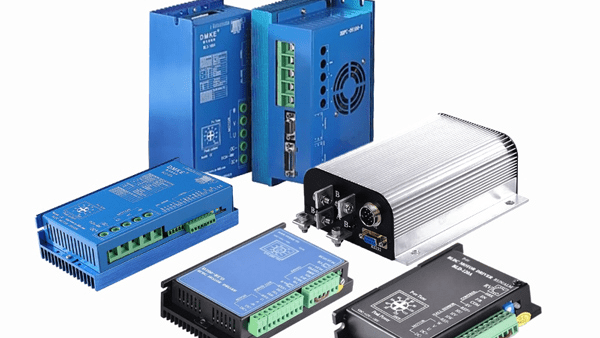
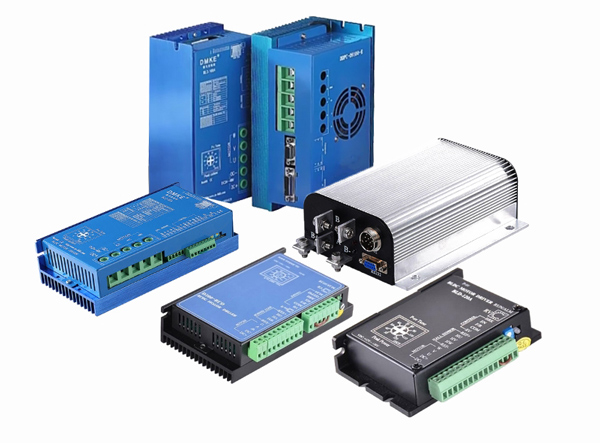
During the era of automation and electrification, accuracy and efficiency are of paramount importance. Since the production of robots started, electric scooters have also been based on smart movement control. The core of this revolution is the BLDC motor controllers, which are devices that control the behavior of the brushless DC motors with amazing precision. They are the force that creates energy-saving machines and vehicles that characterize the future of industry and movement.
What Is a BLDC Motor Controller?
A BLDC motor controller is an electronic unit that controls the operation of the brushless DC motors. In contrast to conventional brushed motors, which are commutated with mechanical brushes, the BLDC motors are electronically controlled. The controller is used to modify voltage and current on demand to guarantee a smooth rotation, maximum torque, and accurate control of the speed.
The controller adjusts the switching of the electronic circuits to achieve perfect timing by constantly measuring the position of the rotor by sensor or sensorless algorithms. This process eradicates mechanical wear and improves dependability, as well as enabling very efficient performance in diverse applications.
Working Principle and Core Components
Another way to explain a 3-phase BLDC motor controller is that it converts electrical energy into precise, controllable mechanical motion through intelligent switching and feedback control. It is normally made up of several significant units, a power inverter (with MOSFETs or IGBTs), a microcontroller that acts on signals, and position sensors (Hall effect sensors or encoders). A user or system interface feeds the controller with the desired input commands, such as the desired torque or desired speed.
These hardware units work in unison through precise electronic switching. In industrial automation, for instance, the controller’s inverter stage—built with high-efficiency MOSFETs—precisely regulates phase current in a robotic arm joint, achieving smooth and coordinated movement. In electric two-wheelers, the same architecture ensures rapid torque response for instant acceleration. This coordinated control allows the motor to run continuously and quietly, as the controller regulates pulse timing and current flow in real time.
It then uses this data to calculate the amount of current required to be flowed into the windings of the motor. The motor then rotates continuously and highly efficiently, and with a minimum of noise by regulating the order and length of current pulses. The safety features, such as overcurrent, temperature, and regenerative braking, are also being featured in modern controllers and enhance reliability and life span.
Applications in Smart Industry
BLDC motor controllers play a crucial role in modern smart factories, driving industrial robots, conveyors, CNC machines, and automated arms that demand both precision and consistency. The controllers also allow high-quality motion profiles that enhance the speed and quality of production and lessen energy usage. Inside every modern factory, BLDC motor controllers orchestrate the seamless movement of robots and machines.
Building on this foundation, engineers at Brushless.com design advanced control architectures that synchronize 6-axis robotic arms and CNC spindles with real-time torque control, achieving sub-degree accuracy and quieter motion. For instance, in an automotive assembly plant using Mitsubishi industrial robots, FOC-based BLDC controllers regulate joint torque in real time with less than 1° positional error, ensuring smooth, repeatable motion. On a high-speed conveyor line, controllers communicate via CANopen networks to synchronize multiple motors, improving line throughput by 15% while cutting power consumption by 18%.
These examples highlight how intelligent BLDC control transforms energy into precision — a core advantage for Industry 4.0 systems. They can also be used in locations that are in constant use since they can run in silence and with minimum maintenance. Besides this, they can be used to monitor the system in real time and for predictive maintenance due to their integration capabilities with IoT systems. This connectivity makes sure that the operations can be smoother and downtime is minimized, which is a critical aspect of smart manufacturing.
Role in Electric Mobility
The development of electric vehicles (EVs), e-bikes, and drones is significantly attributed to the development of BLDC motor controllers. These controllers give the optimal power/efficiency ratio in electric mobility. They control the level of current flowing to the motor, which gives optimum acceleration, braking, and battery performance.
Drawing on Brushless.com’s experience in e-drive systems, we’ve refined BLDC motor controllers to deliver instant torque and longer battery range through regenerative braking. For example, the Brushless.com 48V BLDC motor controller used in many e-scooters applies trapezoidal and FOC hybrid control, providing instant torque within 20 ms of throttle input. This results in a smoother ride and up to 5% longer range through regenerative braking.
In electric vehicles, advanced controllers integrated with the Battery Management System (BMS) continuously optimize energy flow. A 72V BLDC controller in an urban EV reduces overall system losses by nearly 10%, extending the driving range without compromising acceleration.
They can also reclaim energy that would have been wasted with the management of regenerative braking, which increases the range of the vehicle. They regulate throttle reaction and non-lumpy torque in e-scooters. In electric vehicles, they match the work of the motors to be stable and performant. Modern electric transport would not be as efficient and responsive without these controllers.
Efficiency and Energy Saving Benefits
One of the most critical advantages of the BLDC technology is its energy efficiency. Mechanical losses are minimized as there are no brushes that can cause friction. The BLDC motor controllers also increase the efficiency since they employ accurate algorithms that adjust to the load conditions in real-time.
This refers to the fact that the amount of power supplied only at any given time is just adequate, thus minimizing the amount of energy wastage. This translates to reduced cost of operation and increased life span of equipment in industrial and automotive use.
Innovations and Smart Features
The latest innovations in BLDC motor control include advanced methods such as Field-Oriented Control (FOC), Space Vector Modulation (SVM), and sensorless BLDC motor control algorithms, enabling smoother torque and quieter motion. These can be used to make the torque smoother, the speed more accurate, and quieter.
Their impact can be seen across multiple applications. In automated production lines, controllers using FOC maintain constant torque even under variable loads, ensuring consistent output quality. In EV drivetrains, CAN-enabled controllers communicate with the vehicle’s battery management system to optimize energy flow and safety. Some industrial robots even leverage AI-powered diagnostics in their controllers to predict joint wear before mechanical issues occur.
At the system level, Brushless.com’s intelligent controllers are now equipped with integrated communication protocols like CAN, Modbus, and Bluetooth, and are therefore capable of integrating easily with smart grids and automation systems. There are even AI-powered diagnostics, which can anticipate issues with the motor before they take place. These developments make the BLDC technology the basis of smart and environmentally friendly motion systems.
Maintenance and Reliability
BLDC systems have minimal maintenance needs. Since the motor and controller do not have any brushes that need replacing, the service life of the motor and controller is significantly expanded. Regular checkups are also required to check the accumulation of dust, correct connection, and proper cooling.
It is important to have reliable thermal management, particularly with electric cars or heavy machines. The majority of the BLDC motor controllers have temperature sensors that prevent overheating, and they can automatically decrease the level of performance to ensure the system is safe. These controllers can be effectively used for decades when they are well-maintained.
The Future of Motion Control
The following generation of BLDC motor controllers will add additional AI and machine learning features to optimize operation on its own. In a way, future designs will have wireless updates, smarter sensors, and even closer connections with renewable energy systems.
With the onset of electrification in industries, the field of automation, robotics, and electric transport will be built on the foundation of BLDC technology. These controllers are not only high-performance, but they also ensure sustainability through reduced energy use and emissions.
FAQ
What does a BLDC motor controller do?
It controls voltage, current, and timing of brushless DC motors in such a way that it guarantees effective speed control, torque control, and safe operation.
How is a BLDC controller different from a regular DC controller?
Electronic commutation is utilized in a BLDC controller as opposed to mechanical brushes and results in greater efficiency, increased life, and less noise.
Can a BLDC motor run without a controller?
No. The controller is necessary to control the switching of electrical phases, which causes the motor to rotate correctly. In its absence, the motor will not work.
Where are BLDC controllers used?
They are utilized in electric vehicles, industrial machines, drones, household appliances, and HVAC, that is, in all the places where efficient and reliable motion control is needed.
Are BLDC motor controllers energy-efficient?
Yes. They are highly economical in power use, suffer less loss, and give accurate control, so that they are much energy efficient compared to traditional DC systems.
Conclusion
The foundation of modern motion control lies in BLDC motor controllers that enable energy efficiency, precision, and reliability across industries and electric mobility. As robotics and EV technologies continue to evolve, these intelligent controllers will remain essential for achieving smarter and more sustainable automation.
Guided by this vision, Brushless.com continues to advance BLDC motor control innovation — empowering machines and vehicles to move with greater intelligence, efficiency, and environmental responsibility. Learn more about how Brushless.com solutions can optimize motion performance and energy efficiency in your systems.
